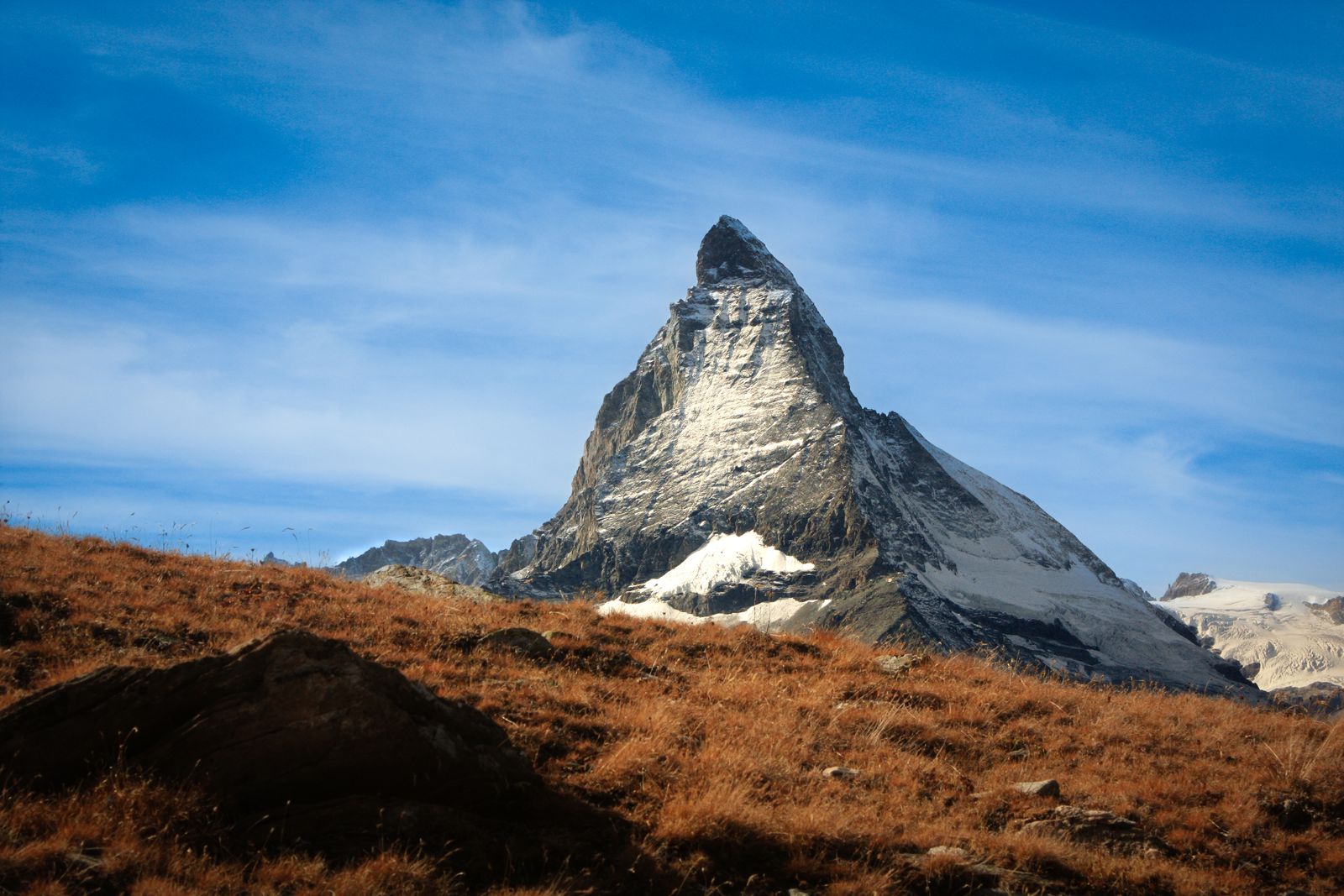
Switzerland is small, vertical and superbly organised, so a 7 day Switzerland itinerary can cover lakes, glaciers and the Matterhorn entirely by train. This route runs Lucerne to the Jungfrau region to Zermatt, and answers the question everyone asks first, which is whether the Swiss Travel Pass actually pays for itself.
See every price in your money. Pick your home country below and all the costs on this page update instantly.
Quick facts before you book
Best time to go: late June to September for hiking, open mountain railways and lake swimming. December to March for skiing. Late April to May is the awkward gap, when lower trails are muddy and some high lifts are closed for maintenance.
Daily budget: around 235 US dollars a day for a comfortable mid range trip, or roughly 140 US dollars a day using hostels, supermarkets and picnics.
Visa: Switzerland is in the Schengen Area but not the European Union. Many nationalities enter visa free for short stays. Check yours in the GlobeDude Explorer.
The route at a glance
Lucerne for two nights, the Jungfrau region based in Interlaken or Lauterbrunnen for three, then Zermatt for two. All by train, all scenic.
Day by day
Day 1: Arrive in Lucerne
An easy first stop, with a covered wooden bridge from the fourteenth century, a lake ringed by mountains and a compact old town you can see in an afternoon. Walk the Musegg wall towers, which are free and give you the rooftops.
Day 2: Mount Pilatus or Rigi
Take the classic golden round trip up Pilatus, combining boat, the world’s steepest cogwheel railway, cable cars and a bus. Rigi is the gentler, cheaper alternative with equally good views and fewer people. Either way you are above the cloud line by mid morning.
Day 3: Into the Jungfrau region
Train to Interlaken, then up into the valley. Lauterbrunnen sits in a trench with seventy two waterfalls dropping off the cliffs, and Staubbach falls almost onto the village. Stay up in Wengen or Murren, car free villages on the ledges above, rather than down in Interlaken.
Day 4: Jungfraujoch or a hike
Jungfraujoch, the highest railway station in Europe, takes you to a glacier saddle at over three thousand metres. It is expensive and worth it only on a clear day, so keep it flexible. The alternative is the Schynige Platte to First hike, one of the great day walks in the Alps.
Day 5: Grindelwald and lakes
Grindelwald First for the cliff walk and the view onto the Eiger north face, or drop down for a day on Lake Thun and Lake Brienz, whose water is an improbable turquoise. Boat between the lakeside villages if the weather turns.
Day 6: Train to Zermatt
A long but beautiful rail day through the Rhone valley. Zermatt is car free and the Matterhorn stands at the end of the main street looking almost artificial. Take the Gornergrat cogwheel railway up for the classic view over the glacier.
Day 7: Last mountain morning
Sunrise on the Matterhorn from the bridge at the end of town, then either the Matterhorn Glacier Paradise cable car or a short valley walk before your train out to Zurich or Geneva.
What this week actually costs
Per person for a mid range trip. Pick your home country above and the flight row updates with live return fares from your nearest hub:
| Expense | Per person |
|---|---|
| Accommodation, six nights | 790 US dollars |
| Food | 430 US dollars |
| Trains and mountain railways | 490 US dollars |
| Extras | 140 US dollars |
| Est. flights from your country | Pick your country above |
| Total for the week, with flights | 1,850 US dollars |
Check it against your income in the Salary Goes Furthest tool.
Is the Swiss Travel Pass worth it?
For this route, usually yes. It covers all trains, buses and boats, gives free entry to most museums, and discounts the expensive mountain railways rather than covering them fully. The pass wins when you are moving between regions most days, as here. It loses if you plan to base yourself in one valley and hike, since local lift passes are then better value. Add up your specific legs before buying, because the answer genuinely changes with the itinerary.
Where to stay
Lucerne old town, then Wengen, Murren or Lauterbrunnen for the mountains, then Zermatt village. Find hotels in Switzerland.
Book ahead
Jungfraujoch tickets, Glacier Express seats and summer mountain huts all need reserving. Browse mountain excursions in Switzerland on GetYourGuide.
Stay connected
Live weather and webcams decide your mountain days here, so being online genuinely changes your trip.
Pay at the real rate: Switzerland uses francs, not euros, and a Wise account avoids paying the tourist rate twice over.
Cover the trip: SafetyWing is a low cost monthly plan, sensible if you are hiking at altitude.
Find the fare: Compare flights to Switzerland, into Zurich and out of Geneva or the reverse.
Frequently asked questions
Is 7 days enough for Switzerland?
Seven days covers three regions comfortably, such as Lucerne, the Jungfrau and Zermatt. Trying to add Geneva, Ticino and St Moritz in the same week turns it into a rail marathon with little time on the mountains.
How much does a week in Switzerland cost?
Around 1,850 US dollars per person for a mid range week excluding international flights. Mountain railways are the biggest single expense, and self catering plus a well chosen rail pass can bring it under 1,200.
Is the Swiss Travel Pass worth buying?
For a multi region route like this one it usually pays for itself, since it covers all trains, boats and buses and discounts mountain railways. If you are staying in one valley the whole time, individual tickets and a local lift pass generally work out cheaper.
What is the best month to visit Switzerland?
July to September for hiking and fully open mountain railways, and December to March for skiing. Late April and May see many high lifts closed for maintenance between seasons.
Is Jungfraujoch worth the money?
Only on a clear day. It is one of the most expensive excursions in Europe, and in cloud you pay a great deal to stand in fog. Keep the day flexible and check the summit webcam before committing.
Interlaken or Lauterbrunnen, where should I stay?
Lauterbrunnen and the car free villages above it, Wengen and Murren, put you in the scenery rather than beside it. Interlaken has more hotels, restaurants and transport links but sits between the lakes rather than in the mountains.
This itinerary is AI assisted and reviewed before publishing. Costs, opening hours and transport schedules change, so confirm current details before you book. Some links above are affiliate links that support GlobeDude at no extra cost to you.